
 简体中文
 English
 русский
 Français
 Español
 عربى
Submit feedback
How to Choose LED Traffic Signals: A Practical Guide to Sizes, Types and Applications
LED traffic signals are chosen by matching three things: the lens size to your approach speed, the optic type to the movement you need to control, and the housing rating to your climate. For most urban intersections a 300mm full ball or arrow head is the safe default, while 200mm heads suit slower roads, campuses and secondary approaches. This guide walks through each decision with practical examples drawn from the TTS Safety traffic signal range.
Quick Answer: What to Pick First
If you only have a minute, use this rule. Choose 300mm LED heads where drivers approach at speed or need to see the signal from far away. Choose 200mm heads where speeds are low and the signal is viewed from a short distance. Choose arrow optics when a turn movement needs its own phase. Choose pedestrian and bicycle heads whenever those users have their own crossing time. The sections below explain why.
How to Choose LED Traffic Signals for a New Intersection
A good selection process moves from road conditions to hardware. Starting with the road keeps you from overbuying large heads for a quiet street, or under specifying small heads for a busy arterial. Work through the four steps below in order.
Step 1: Measure Approach Speed and Viewing Distance
The faster vehicles travel, the earlier a driver must recognise the signal state. A vehicle at 50 km/h covers about 14 meters every second. At 80 km/h that rises to roughly 22 meters every second. A larger lens and a brighter LED array give the driver more time to react, which is why 300mm heads are the common choice on faster approaches.
Step 2: Decide Which Movements Need Their Own Signal
List every movement at the intersection: through traffic, left turns, right turns, pedestrians and cyclists. Each movement that runs on its own phase needs a matching optic. A shared lane can use a full ball head. A protected turn lane works better with an arrow head, because the shape of the lit symbol tells the driver exactly which lane the signal applies to.
Step 3: Check Housing, Lens Material and Protection
Housing and lens choices affect durability. Plastic housing with a PC or glass lens is common in the range, and several 300mm models list IP53 protection. Check how the product will be used. Roadside installations in dusty or rainy regions should be reviewed against the protection rating, and installers should confirm that the lens material suits local sun exposure.
Step 4: Plan Power and Control
Confirm the supply voltage, the controller output and the cable layout before ordering. Countdown signals need a data or timing connection in addition to power, so they require more planning than a plain red, yellow and green head. Settling this early avoids rework during installation.
200mm vs 300mm LED Traffic Signals: Which Is Better
Neither size is better in every case. The right answer depends on speed, distance and the visual clutter around the signal. The table below compares the two sizes on the points buyers ask about most.
| Factor | 200mm Head | 300mm Head |
| Lens diameter | About 8 inches | About 12 inches |
| Best road type | Local streets, campuses, car parks | Arterials, highways, wide junctions |
| Viewing distance | Short to medium | Medium to long |
| Head size on pole | Compact and lighter | Larger and heavier |
| Example models | CJ-203MP-S, CJ-203JT-S | CJ-303MP-SWK, CJ-303JT-SWK |
When 200mm Is Enough
A 200mm head works well where vehicles slow down before the stop line. Examples include school entrances, factory gates, small commercial roads and car park exits. On a road with a limit of 30 km/h, a driver sees a 200mm lens clearly at a normal braking distance. The smaller head also reduces wind load on mast arms and brackets, which can simplify the mounting hardware.
When 300mm Is the Safer Choice
Choose 300mm when the signal competes with shop lights, billboards or bright sky. The larger face area gives a stronger visual target, and it remains readable when a driver approaches from further back. Multi lane roads with posted limits of 60 km/h or more are the usual home for these heads.
Explore the LED Traffic Signal Range
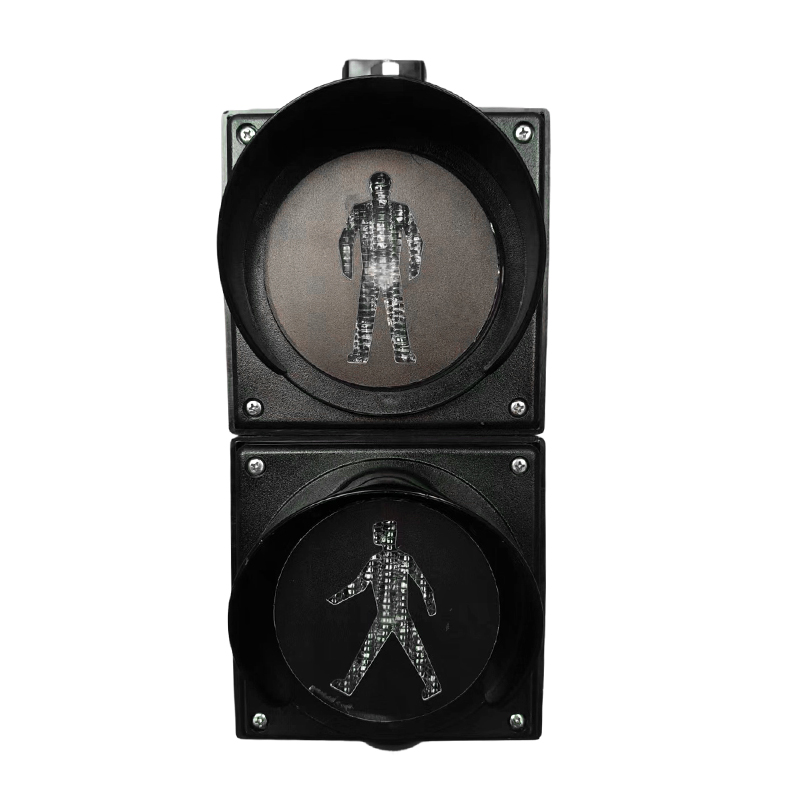
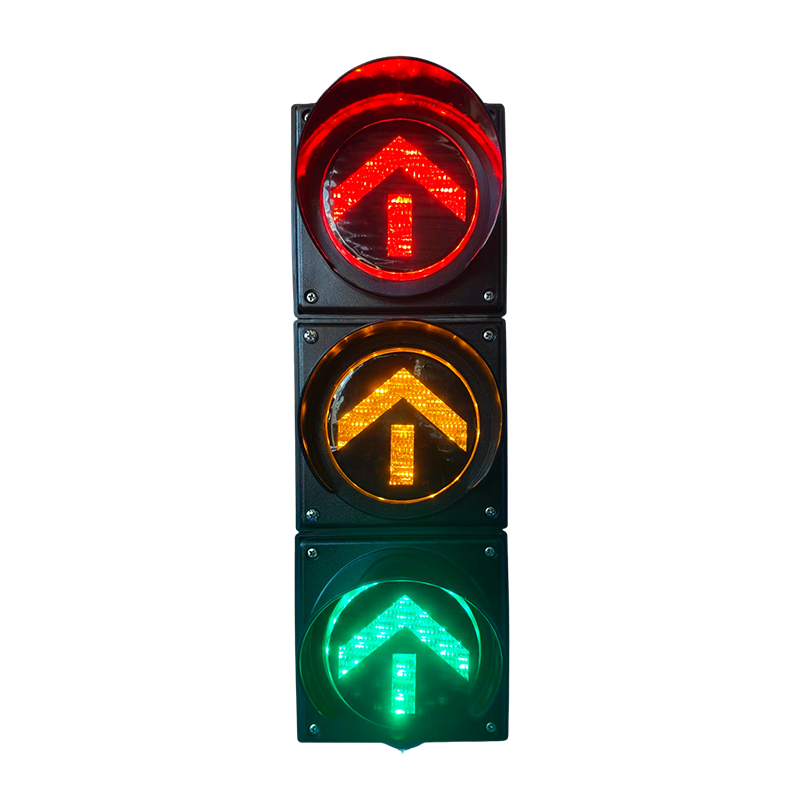
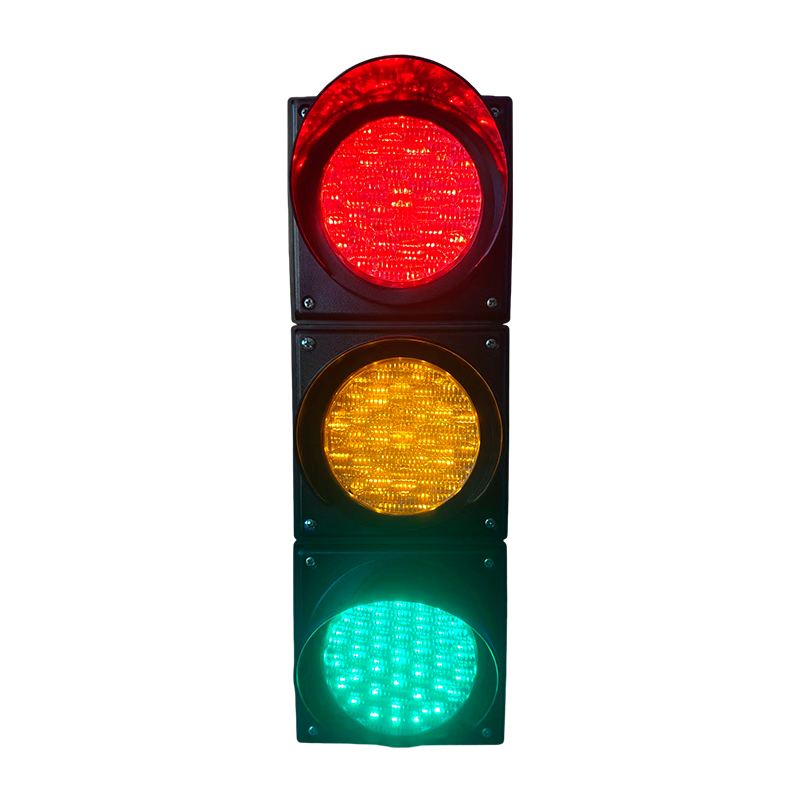
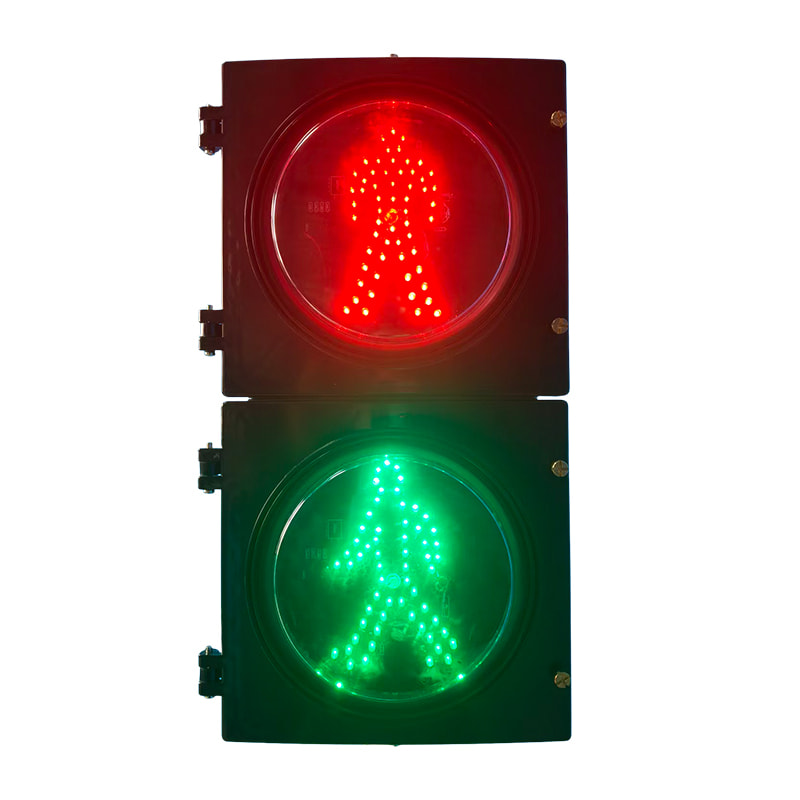
The cards below show the main models in the product line. Each one links to its product page, where you can review specifications and request details.
Full Ball vs Arrow LED Traffic Signals: Which Do You Need
Use a full ball head to control all movements in a lane, and use an arrow head to control one direction only. The decision is about clarity. A full ball tells every driver in the lane to stop or go. An arrow tells only the drivers who intend to follow that arrow.
| Situation | Recommended Optic | Reason |
| Through lane with shared turns | Full ball | One message for the whole lane |
| Dedicated left turn lane | Arrow | Separates turning from through flow |
| Lane control at a toll or gate | Arrow | Directs vehicles to the correct lane |
| Simple two way crossing | Full ball | Fewer heads and a simpler layout |
Models such as CJ-103MP-S and CJ-303MP-SWK cover the full ball need, while CJ-203JT-S and CJ-303JT-SWK cover the arrow need in 200mm and 300mm sizes. The CJ-103JT-S triple arrow head is useful where a single stack must show an arrow state for a specific lane.
Combining Both on One Pole
Many junctions use a full ball head for through traffic and an arrow head above or beside it for turns. This is common practice and keeps the driver focused on the signal that applies to the chosen lane. Keep the order of colors consistent from head to head so that drivers read every stack in the same way.
Which LED Traffic Signals Suit Pedestrians and Cyclists
Signals for people on foot and on bicycles use symbols rather than plain circles. Symbols reduce confusion because users see a shape that clearly refers to them and not to the vehicles beside them.
Pedestrian Signals with Red Man and Green Man
A standing red figure and a walking green figure are understood across languages and age groups. The CJ-102HLR-S, CJ-202HLR-S and CJ-302HLR-SWK models cover this need in different sizes. For wide roads or crossings with heavy foot traffic, the 300mm CJ-302HLR-SWK gives a stronger display from the far curb.
Countdown Pedestrian Signals
A countdown display shows how many seconds remain in the crossing phase. This helps older users and parents with children decide whether to start crossing. It also reduces last second dashes into the road. The CJ-302HLRD-SWK and CJ-303HLRD-SWK models combine the figure display with a numeric timer. Because they need a timing connection, plan the controller interface at the design stage.
Bicycle Signals
Where a cycle lane has its own phase, a bicycle symbol head prevents cyclists from reading the vehicle signal and moving at the wrong time. The CJ-303ZXC-SWK shows red, yellow and green bicycle symbols in a 300mm plastic housing with PC or glass lens and an IP53 rating. It suits protected cycle tracks and junctions where cyclists cross on a separate phase.
What LED Traffic Signals Suit Campuses, Work Zones and Private Roads
Not every signal is installed on a public highway. Many buyers need lights for private or temporary environments, and the same selection logic applies at a smaller scale.
Campuses and Industrial Parks
Internal roads are typically slow and short. A 200mm full ball head such as the CJ-203MP-S usually gives enough visibility. Add a pedestrian head near gates and canteens where staff cross between buildings.
Construction and Work Zones
Temporary single lane working sections often use two way alternating control. Compact heads with a clear red and green display are practical, and the lower weight of a plastic housing makes repositioning easier. Always secure the mounting so that wind cannot rotate the head away from oncoming traffic.
Car Parks and Logistics Yards
Entry and exit lanes benefit from simple red and green control, and arrow heads can show which lane is open. In loading yards, a visible signal reduces vehicle conflict at blind corners.
Why LED Beats Older Lamp Technology
LED signals are now the standard choice for new installations because they use less power, last longer and stay bright with less maintenance. Typical industry figures show energy savings of up to 80 percent compared with older incandescent signal lamps, and rated service lives of 50,000 hours or more. At a rate of 24 hours a day, 50,000 hours equals nearly six years of continuous operation.
Maintenance Habits That Extend Service Life
Inspect lenses every six months for dirt, cracks and moisture. Check that brackets are tight and that visors still shade the lens from direct sun. Record the date of each inspection so that you can spot patterns, such as a single location that needs frequent attention.
Final Checklist Before You Order
Use this short list to confirm your choice. Each item should have a clear answer before you request a quotation.
- Approach speed and viewing distance are known for every leg.
- Head size is selected for each approach: 200mm or 300mm.
- Optic type is chosen for each movement: ball, arrow, pedestrian or bicycle.
- Housing, lens material and protection rating match the site climate.
- Controller outputs and supply voltage are confirmed with the installer.
- Countdown models have a timing connection planned.
Next: How to Choose Solar Street Lights: A Practical Guide to Types, Sizing and Applications


Contact Us
-

Email: alex@streetlight-solar.com
-

Tel: +86-19962566117
-

No. 1, South Tongshan Road, Tianshan Town, Songqiao Town, Gaoyou City, Yangzhou City, Jiangsu Province, China
